

Coupling nuts are elongated internally threaded nuts also known as extension nuts. These are used to connect two male threaded parts like threaded rod or hanger bolts.
/Asset/coupling_nut_2015.jpg
High Nuts
High nuts have an increased height from standard nuts. This larger surface area is better for wrenching in applications like automotive and industrial equipment industries.
/Asset/high_nut_2015.jpg

Square Nuts
Square nuts have an outer square shape keeping them from rotating or loosening once in a channel or square hole. These nuts are easier to grab and tighten with a wrench.
/Asset/square nut_2015.jpg

Acorn Nuts
Cap nuts, also known as acorn nuts, have a domed head which protects the screw or bolt from stripping. The acorn nut provides a finished look to the end of the bolt when applied. Cap nuts can be reused and removed easily.
/Asset/cap nut_2015.jpg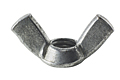
Wing nuts are tightened and loosened by hand. These nuts are typically used in applications where adjustments or disassembly are frequently required. Wing nuts can be used in panels, marine hardware, and furniture applications to name a few.
/Asset/wing nut_2015.jpg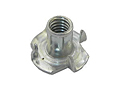
Tee Nuts
Tee nuts are commonly used in wood applications. The prongs of the nut dig into the surface to ensure the hold and to help the nut sit flush with the surface. The center of the tee nut has an internal thread. This internal thread lines up with the hole in the material and a fastener is joined by going through the material into the tee nut.
 |
     |
